Wednesday, January 14, 2026

Pedals, Pain, and A Resurrection


 When I relocated to Pittsburgh in the 1970s I was unable to find a position open in the OR so I accepted a position at Montefiore Hospital that offered a month-long critical care course if I agreed to work for a year in their neurosurgical ICU. My home in the OR was the neuro room so it seemed like a good fit. One of my first patient experiences fossilized itself onto my heart and with my low emotional IQ, that's  really saying something! I have never seen a patient with so much neurotrauma make a recovery like hers.

Before she received a depression generating "C" grade in thermodynamics, before her suicidal drive shifted into high gear, before she blasted down Bates Street with pedals pumping and a chainring spinning like a top, before the deliberate impact with her road bike impacting  a brick wall fronting a moving and storage building, before a 4-hour session in the OR to tease and release a huge subdural hematoma, Jenna had been an outstanding mechanical engineering student at the University of Pittsburgh with a spoiled little Shi Tzu as a pampered pet..

The Neuro ICU at Montefiore hospital was a huge room with 10 beds separated by curtains, but there was an alcove like area hugging bed "1" and that offered a modicum of privacy for staff interactions with comatose patients and Jenna was going to need all the stimuli she could get. She was transported directly from the OR to neuro ICU and her entrance was memorable. Jenna was a young looking 21-year-old who could have easily passed for a teenager. She looked so tiny and helpless in her ICU bed with her thick blond hair cascading below the cranial dressing on the unshaved side of her head. 

It didn't take an assessment via the Glassgow Coma Scale to see that she was well beyond obtunded and her consciousness had exited the time/space continuum long ago. Her pain was captured in the coarse weave of the gauze carefully wrapped around her fractured skull. The number of surgeons, nurses and anesthetists accompanying her foretold a grave prognosis. Prodigious pumping was always a bad sign and the anesthetist was squeezing the Ambu bag like a sailor squeezing a sponge to bail out a sinking boat. A harried nurse was pumping away on the syphgmo to tease out a blood pressure and one of the critical care medicine fellows was maintaining pump pressure on the infuser for her arterial line. A trio of pumpers was not a good omen.

We connected her endo tube to one of the newfangled Puritan-Bennet MA-1 ventilators which had just recently replaced our old Engstroms. Those old ventilators had a nice soothing swish/whisper sound to them while the new Bennets had disturbing bark-like noise when the inspiratory cycle was initiated. I didn't  like them. Untangling her mannitol, pressor, arterial and blood lines made me wonder if anesthesia folks were macrame aficionados! What a mess.

We did not have dedicated gizmos to secure endotracheal tubes and the heavy adhesive tape applied in the OR was snagged in what little hair that was hanging like a stalactite from her cranial dressing. After she was settled in, I explained to her, "I'm going to free your hair from the tape and comb it out so you can be styling." I always liked to plaster two pieces of tape together sticky side to sticky side where there was contact with hair. Sometimes it's the little things that matter the most.

Neurotrauma is a beast that maliciously extends its tentacles to outlying organ systems inducing problems like diabetes insipidus, hypotension, thermal dysregulation, and in women, disordered menstrual cycles. On the second day of Jenna's coma her menstrual period began with the intensity of a Mount Vesuvius eruption. I didn't know if it was her time, but the intensity suggested a jump start secondary to her neurotrauma.

Her Mom brought in a box of tampons for her, but ICU policy restricted their use, so I explained to Jenna what we were going to do. I said, "Jenna, I really hope you can hear me (I was hoping that despite her comma I could communicate with her on some level.) We really need to monitor your flow so I'm so sorry we can't use tampons. You have so many internal devices that pads are really a better option. I'll change them every couple of hours and tidy you up. I really hope this is OK with you." I rolled up a chucks blue pad like a burrito with the absorbent side facing out and used it to prop an ABD pad into position.

Slowly Jenna began to show signs of the coma lifting and on the fourth day we were able to extubate her. Her eyes were open and beginning to sluggishly follow moment. 

I had a couple of days off and upon return to the unit the nurses were excited because Jennna was awake and verbalizing. One of the first requests she made was to meet the male nurse who apologized for the pad substitution for the tampons. I strolled over to her bedside and told her how happy I was to see her awake and she began crying. "When I heard that masculine voice apologizing for the tampon ban, I just knew that I had to meet you. I think that gave me a reason to wake up. I will never forget you."

I certainly never forgot Jenna!

Wednesday, January 22, 2025

Portraiture A'la Downey V.A. Style

Neuro was not one of my favorite courses in nursing school, but one lesson stayed with me throughout my approach to unresponsive patients and that was to talk with them. It didn't matter if they were comatose, obtunded, catatonic, or my favorite term, hypovigilant. If the auditory cortex found within the temporal lobe was intact patients could at least hear to some degree. Even if they could not understand the speech, a nurse's rhythm and timbre could still be detected and communicate caring and concern.

There were quite a few nonresponsive patients I encountered while working at Downey V.A. hospital, a long-ago shuttered facility devoted to the long-term care or in more pejorative vernacular, warehousing of schizophrenics. Crude treatments of the day including lobotomies, insulin shock, and massive doses of major tranquilizers were enough to silence just about anyone including a gentle old soul named Ireno who rarely spoke.

Ireno was a massive bull of a man who had been confined to the forlorn pastures of Downey VA hospital for decades. Standing in line for medications he towered over the other patients, despite his threatening size a HumpteyDumpteyish aura surrounded him. He was mute and acted as if the slightest action could break him apart.

Ireno had been on massive doses of Thorazine which works by blocking dopamine receptors in the brain and as a result more dopamine is released systemically in the synaptic clefts. There is more dopamine around the peripheral nerves and more receptors to respond to it resulting in uncontrolled tremors and movement disorders.

One evening I noticed Ireno reclined on the floor of the day room which was his usual habitat before the dorms were opened. I frequently opened the dorms early, but had to wait until the nursing coordinator made her rounds. The VA had many rigid rules and one dictum stated the dorms were to be locked until 10PM.

I noticed Ireno busy at work with a pencil and paper while wearing heavy winter gloves to attenuate his shaking hands. He also was applying counter traction to his tremoring arm by attaching a sleeve of an old tee shirt to a valve on the radiator with the other sleeve wrapped around his elbow. Whatever endeavor he was up to required great effort and concentration When I walked over to him, he quickly covered his paper, but looked up at me with kindness in his eyes. I told him the dorms would soon be open so he could hit the sack and rest in comfort.

About an hour later, Ireno shuffled up to me and proudly presented me with this portrait he had laboriously sketched out for me. I was stunned by his effort and thanked him profusely and was rewarded with an extremely rare vocalization. "You're welcome" Ireno clearly stated.

I keep a nurse's treasure box for all the little notes and trinkets that grateful patients so kindly provided me. Ireno's artistry is one of my very best treasures and proof to me that every day life on the back wards of downey VA could be miraculous if you knew what to look for. It took a combination of a miracle and sheer willpower that Ireno could sketch this out with his severe tardive dyskinesia induced severe tremors. Michaelangelo likely had an easier time painting the ceiling of the Sistine chapel. 

Monday, September 16, 2024

Student Nurse Uniforms-Rules and Regulations (Circa 1969)


.
.
On a recent glance through some old nursing school papers a peculiar document jumped out at me. It was a signed copy of our school's uniform requirements which were aggressively enforced with weekly uniform inspections. Since I'm just going to copy the agreement, this post will have a more cohesive narrative arc than my usual foolish ramblings. I guess it's about time for a clean linear narrative that's more coherent than my dementia fueled posts!

UNIFORM REQUIREMENTS
The uniform of the school of nursing should be worn with dignity, respect. and in strict accordance to the following regulations. The complete uniform is worn only in the buildings of the hospital. If worn with a lab coat, the complete uniform may be worn to and from the mailbox at Wellington and Dayton.  (With no quick stops at the Wellington Ave liquor store.)  Sorry sometimes my foolishness just pops out! 

Students are in complete uniform when they are wearing the following:
1. The blue school dress which may not be shorter than the midpoint of the knee.
2. The white school apron, with it's hemline two inches above the hemline of the dress, it is to be worn in all clinical areas except the operating room, obstetrics, pediatrics, and isolation wards.
3.The white school cap (beginning after capping ceremony,) which is to be clean, Argo starched, and properly folded. Seniors are to wear a 5/8 wide black velvet band. The band is placed parallel to the very last row of stitching. The cut edges are folded under the band at their terminus. the cap is secured by white bobby pins and may never be worn outside the hospital.
4. Hair is to be clean, neat, simply styled and away from the face. No loose strands of hair shall contact the face. Hair must not touch the uniform collar. It may be secured by a barrette if the appliance is totally inconspicuous. Pincurls,curlers, or hair ornaments are never to be worn with the cap.
5.Under clothing must be clean, white and in good repair. foundation garments must be serviceable and inconspicuous. Condition of under garments is subject to verification at uniform inspections. (Hmm...maybe that's why I was always rejected when I volunteered to assist with uniform inspections)

All students in complete uniform must wear white clinic shoes, polished and in good repair. Laces are to be clean and white.

Wear hosiery that is white clean and in good repair.

Hands must be clean, and the nails cut short (the optimal subungual space is 1 mm.) No nail polish including clear may be worn. When going off duty a lotion should be applied to the hands-a dermatitis makes the proper cleansing impossible, thus rendering hands unsafe for duty.

Not wear decorative jewelry (this includes wires or plastic appliances for pierced ears.) Name pins are to be worn on the upper left chest.

Each student must carry accessories to complete the uniform. these include a red and black pen, notebook, a watch with accurate second hand, and a bandage scissors.

The student nurse who is properly attired in her uniform has an air of vigor and a joy for the privilege of caring for others.

As usual, male students got a break when it came to uniform regulations. We wore a white scrub top and white cotton pants. I never attended a uniform inspection!  

Thursday, September 12, 2024

Portrait of Oldfoolrn As a Young Man

A few recent emails inquiring about my dearth of recent posts with concerns about my health really warmed the cockles of my arteriosclerotic laden heart. Yep...I've had a few recent issues; bilateral knee replacements with complications, cataracts, and an overwhelming (almost) klebsiella sepsis. I would have never survived as a devout weaver of more foolishness without the caring expertise of so many outstanding whippersnapperns! I was deeply touched by their caring and skill. My nursing world was so far removed from theirs that I cloaked my identity as an Oldfoolrn! I lied and told them I worked in a produce warehouse which was partly true.

So I ventured down to my basement junk pile nursing archives to search for an inspiration to write something. Sometimes not writing is as important as writing, but lo and behold I stumbled across this image of me posing in all my foolhardy grace with my esteemed classmates well over 50 years ago. This was a time when 3 year hospital based nursing education (if you could call it that!) ruled the roost.

These archaic programs promulgated some very bizarre notions and customs where consciousness was outsourced to the will of the school. Diploma nursing schools were bastions of laissesz-faire zeitgeist. It might be foolish to describe a Chicago based nursing school using French and German words, but this terminology fits the culture like a glove.

By way of further and complete obfuscation explanation, we were expected to be totally non-judgmental when caring for patients while being subjected to judgments that were akin to dogmas established by religious fanatics. We were prohibited from ever carrying money to reinforce dependency on the school despite living in a building that had marble clad walls, terrazzo floors, and a chandelier in the auditorium that rivaled the one in the opera house. The generosity of well heeled donors extended only to durable structures not people.

We were expected to exhibit an instinctive kindness even when working all hours of the day and night. Our first clinical rotation was during a hot Chicago summer on a detox medical ward. I will never forget the hodge-podge of smells (paraldehyde, emesis, sweat, and Kayexalate induced stools.) The intrepid instructors believed if a student could survive in this environment, they would be able to limp to completion of the program 3,000 hours and 30 months later. We started with 78 probies and graduated 23 nurses. I think the graduates envied the folks who had the sense to bail out!

It's interesting to note from the class picture that only those with the grim sour puss expressions (self included) managed to graduate. My friend, Rhonda, the smiling, ever pleasant young lady on my right left after 6 weeks to escape the mind numbing, soul shattering world of a vintage Chicago training hospital!

Wednesday, July 12, 2023

Gastric Freeze-A Cold Hearted Idea

A stomach freezing machine. That eggplant size balloon
in the MDs hand was inserted transesophageally and zero
Degree F. ethyl alcohol circulated via a double lumen catheter.

 Whoever came up with that old medical adage stating if there are 3 or more treatments available for a single ailment, none are effective, was likely talking about duodenal ulcer treatments of the 1960s.Whacky dietary regimens featuring half and half or whole cream as the main ingredient, antacids, and of course tranquilizers because nervous folks suffered from ulcers were medical interventions of the day.

About 15% of ulcer patients had a dismal response to medical treatments and required surgery. The operation of choice was a gastrectomy with or without vagotomy (cutting the nerves that stimulate acid secretion.) This was big time surgery of the day and carried about a 5% mortality rate along with patient dissatisfaction from digestive problems. Every old nurse was acutely aware of the dreaded dumping syndrome where high carbohydrate foods entered the duodenum like greased lightening causing dizziness and occasional fainting.

Intractable medical problems like gastric ulcers often produce nonsense like this textbook edict, "The disease is easy to treat but difficult to cure."  (That classic was from our Brunner's Nursing textbook.) About one in ten Americans harbored an ulcer and the disease favored men. The combination of lots of suffering folks and the medical mind set to do something... anything... for a cure frequently produced disastrous results. Medical breakthroughs touted on newspaper front pages sometimes proceeded to the obituaries as time passed. Certainly, this was readily evident with frozen stomachs and their hemorrhagic complications.

In 1960, a group of surgeons headed by the famous Dr. Wangensteen, inventor of the lifesaving intermittent suction named after him came up with the notion that gastric ulcers could be cured by freezing the stomach.  General hypothermia (lowering the body temperature to 86 degrees F. (or 30 degrees C.) was occasionally used to help patients survive brain or cardiac surgery.  Under general hypothermia, gastric acid secretion was noted to decrease.

Dr. Wangensteen questioned, instead of cooling the whole body, what would transpire if only the stomach was chilled? He took the notion one step further and wondered about not merely cooling the stomach, but actually freezing it. I guess he never thought about what happens to a frostbitten ear; it falls off.

Desperate for an ulcer cure, freezing the stomach seemed worth a try. A balloon shaped like the stomach and a double lumen catheter to circulate freezing cold ethyl alcohol (zero degrees F.) through the balloon was devised. Experimental trials in animal trials commenced. I could never, ever work in an animal lab with dogs whose internal organs were rearranged and fooled around with in the dubious name of science.

One of the bizarre demonstrations of the frozen stomach efficacy was to oxygenate a frog and lower it into the stomach of a live dog. From an untreated stomach the completely digested frog was pulled up 6 hours later. From the frozen dog's stomach the frog would emerge hopping away at a lively pace. Yikes.. and I thought watching my cat vomit mouse parts was disgusting!

The May, 1962 Readers Digest ran an article, (They're Freezing Ulcers to Death,) and thousands of patients began demanding the treatment. Maybe they should have renamed the magazine The Digesters Reader! Sorry, blame that one on my foolishness.

The medical industrial complex quickly responded and stomach freezing machines were manufactured for eager hospitals and physicians despite the reservations of more conservative practitioners. This was not another innocuous pill that could be discontinued in the event of complications, but an anatomical alteration with the potential of real morbidity and mortality.

The gastric freeze did eliminate symptoms for some folks, but the ulcers always returned with virulent ferocity. A few unlucky souls experienced immediate separation of the lining of their stomachs and uncontrolled bleeding which required emergency surgery with sometimes catastrophic loss of life. The gastric freeze treatment lasted about 5 years (1963-1968) before practitioners gave it up. Too many complications with loss of life.

A bona fide cure for most gastric ulcers came about when a 1985 article published by Warren and Marshall in The Journal of Gastroenterology described a bacterial infection by H. Pylori as the cause of ulcers. The good doctors proved their point by infecting themselves with the bacteria. an antibiotic regimen proved to be the bonafide cure for gastric ulcers.

Saturday, May 20, 2023

Happy Armed Forces Day!

 To all those amazing folks on active duty and veterans, you are deeply appreciated and there is really no way to thank-you for the sacrifices you make. I think of you folks daily!

Tuesday, February 14, 2023

On Tenterhooks with Atrial Fibrillation!

 Despite the pledge I made to myself to refrain from personal health related complaints, here I go with more foolishness about my recent hospitalization. The nurse-turned-patient phenomenon can be fertile ground for peculiar insights into the illness experience.

I've had episodes of atrial fibrillation now for about 13 years. They are usually no big deal, but combined with a Klebsiella sepsis, the last one was tough to shake off and required more intensive intervention. I was minding my own foolishness in the ER holding area, awaiting an inpatient bed to avail itself when all of a sudden it felt like there was a kettle drum pounding away in my chest. I was going to say that it felt like an elephant sitting on me, but my wife is right, I tend to exaggerate. The medical resident was close by so I told her that my chest was feeling "funny." I really don't like to disclose that I was a nurse to providers so I understate and use foolish vernacular to illustrate my plight. My nursing experiences are too dated to be relevant today.

She took a quick listen with a fancy electronic doodad festooned stethoscope and shrieked to a nearby nurse to put me on a monitor. The nurse hastily applied the electrodes, gazed at the monitor with that avian eyeball intensity and flipped out, shrieking to get the crash cart. I was doing just fine up to this point, but in all the ensuing drama, I felt panicked-not a good thing when you are in atrial fib.

The arrythmia was promptly converted to normal sinus, but I felt guilty for all the excitement my predicament caused.  I was perusing some of the tips for novice nurses on atrial fib that Kati Kleber RN MSN had on her nurse education site, FRESHRN. One of her suggestions really hit home, "Put on your nurse face when caring for a patient in atrial fibrillation." From a patient's perspective, I offer up a hearty AMEN to that one!

For all you bright whippersnapperns out there take a gander at FRESHRN. I really admire Kati's fine work and it's a wonderful resource..

Wednesday, January 11, 2023

WHAT...Trauma Surgery Cancelled? It's Time for a Fable

 Every long time nurse is acutely aware that nursing can be a leading cause of "fun" deficit. After so many hours standing behind or in front of your Mayo Stand nothing seems to bring about that good feeling that unabated fun provides. (Maybe it's just my foolishness, but I never could deduce if I was in front of my Mayo Stand or hiding behind it.) It's sorta like that chicken and egg quandary about what came first, but when the surgeon is bellowing, I think it's best to be rearward of your Mayo Stand. Boundaries can be a real asset.

It happened more often than you would think, the on call gods were restless and that blasted phone arouses the lowly scrub nurse from a peaceful midwinter slumber. The frantic voice on the other end of the blower announces, "Hey fool...up and at 'em, there is a hot trauma in the ER headed your way, it's time to hit it!"

I scrambled into our trauma room and hastily set up my Mayo and had my back table loaded for bear with enough pieces of sharpened stainless steel for the grandest surgical event known to mankind, Lansing, Michigan! I meticulously scrubbed up at my lucky porcelain scrub sink and my heart was in overdrive, just like a thoroughbred in the starting gate roaring to go.

Most often, this was the beginning of a long, late night slog involving a gazillion needle holders loaded with aching fingers to patch up shredded hollow viscus organs or lacerated livers. My personal, least favorite patch up job was with damaged kidneys, not only were they tough to access in their retroperitoneal hiding spot but required a significant quantity of little fat balls harvested by the hapless scrub nurse to seal and close severed poles. I once asked Dr. Shambaugh to suture a fist sized fat ball to the exposed glomeruli and be done with it and was promptly rebuked, "It doesn't work that way fool!"

Occasionally, an anesthesia resident would poke his head in the swinging OR door and proclaim with overtones of gloom and doom, "The surgery is cancelled, pack up and go back to sleep, Fool, and don't forget the bottom bunk is mine." Cancellations were a big letdown for me and in the back of my head, I knew someone had just crossed over to the other side without even getting a second chance in the OR. Trauma surgery cancellectomies had all the ingredients for a sad...sad story.

So instead of dwelling on death and depression, I would invent alternative realities to the grim happenings. One of my favorite self-told fables was that the poor soul got lucky and managed to sleep it off. What the heck, it was 4:30 AM and everyone else was sound asleep. Everyone is well aware of the regenerative power of a good snooze, well maybe not for massive blunt trauma or big time gunshot wounds, but the notion of  a trauma victim sleeping it off was as comforting as petting a lap dog.

Surgeons and scrub nurses are procedure oriented and live to do things to folks. The sad truth is that most surgical SNAFUS are errors of commission which contrast qualitatively with errors of our non surgical cohorts errors of omission. Maybe this cancellation saved some poor soul from a surgical mishap or foreign body misadventure. HOORAY...that cancellation was a good thing and saved someone from misery and suffering. 

The other mental slight of hand with cancelled emergency surgeries was the notion of a transfer. The fantasy went like this: although we were the only trauma center on the North side of Chicago, the patient was simply moved to another unit or hospital. A much more soothing slight of mindfulness than envisioning a poor soul resting on a hard slab in the morgue cooler.

Although we are living in the twenty-first century, our emotional responses emanate from a stone age brain. Telling yourself uplifting fables isn't all bad, especially if they allay that sense of paralysis inflicted by a troubled limbic nervous system.

Friday, November 4, 2022

Healthcare Paradoxes

  Wake up! It's time for your sleeping pill.

Go Lytely...This stuff is like a Mount Vesuvius eruption purge in a bottle! Not exactly lightly about anything.

Lifesaving surgery...Red Duke, the famous Texas trauma surgeon, debunked this one many moons ago. "When God punches your ticket, he does so with profound authority, without regard to human intervention." 

Soft code...When the notion that CPR was good for all surfaced, the concept of a muted code emerged: walk, don't run, pediatric compressions for 300 pounders, etc. There really is no such animal as a soft code.

Bathroom privileges... This is a biologic need. Do we have room air privileges for patients to breathe?

Therapeutic milieu... I learned the fallacy of this one early on at Downey VA hospital. A nurse office sitter was orienting me to my psych unit announcing that this was their "therapeutic milieu" as she opened the locked door to the ward. A pool ball sizzled by my head like it had been launched from a mortar and 2 patients were bayonetting each other over in a corner with a cue, while a third was struggling to remove an impaled rack from his head. Therapeutic???  I don't think so.

Normal saline...How normal is an IV solution when it can cause metabolic acidosis and renal function changes?

ILL health...Health is health and there is nothing ill about it.

Pressure ulcer... Nope, if pressure caused ulcers, divers would be one giant bedsore. It's the shear forces that cause decubitus ulcers.

Confined to a wheelchair...As an occasional wheelchair user, this one really grinds my gears. Wheelchairs provide mobility and freedom!

Saturday, October 29, 2022

Fun With Artificial Intelligence Image Generators


Since my native intelligence has been flumoxed by brain numbing complications from my knee replacement surgery, I've turned to artificial intelligence image generators for some foolish amusement. I typed in Old fool RN on "Stable Diffuusion," an open source image generator and my prompts produced this appropriate image. Maybe I should replace that rather dated blog profile photo of me standing under the overhead lights in the OR. Hmmm...I love how that under the overheads lingo sounds. It doesn't take much to amuse a fool.

If you have an opportunity check out Stable Diffusion. It's easier than a camera or paint brushes to construct images. Hopefully artists and photographers won't be data based out of an occupation, but who knows?

Sunday, October 23, 2022

Institutional Misogynism: The Women of Downey VA Hospital

At the height of the Viet Nam War, Buddhist Monks doused themselves with gasoline and immolated themselves near U.S. facilities to protest America's involvement in the conflict. Two Army nurses rushed to the aid of a monk who set himself ablaze near a remote Army field hospital. A Viet Cong sniper fired on one nurse, killing her instantly. The second nurse, for obscure reasons, was ignored by the sniper and survived. Screaming hysterically and subsequently lapsing into a mute state, the sole survivor eventually found her way to a long-term ward at Downey VA Hospital, a warehouse for the mentally ill. The slain nurse was hailed as a heroine and awarded several posthumous medals and an honorary promotion to Major. A street at Fort Sheridan Army Base was named after her.

(A snippet of Downey V.A. Hospital folklore)


I  worked as a nurse at Downey V.A. Hospital for several months before I was aware there were women veterans confined amidst the 1600+ men. One evening I received a frantic phone call from a nurse in Building 135 asking if I could come to their ward and start an IV on a patient who was seizing. My recent medical background was an anomaly among Downey nurses. Most nurses employed there had worked on the back wards for decades, allowing their med-surg skills to atrophy. Eager to be accepted in this strange new land, I let it be known if there was an emergent medical problem, I was available to do what I could.

I furiously jammed my bit key into the worn slot on the heavy solid steel door on ward 3A, Building 135 and the portal opened briefly and ominously clicked shut. I was shocked to see an emaciated young lady seizing away on the dayroom floor. I should have suspected that any women patients at Downey VA were sequestered in gender segregated silos. At the time, womens' roles in the military were restricted by gender. It was a male dominated world with tentacles that extended to the V.A. psych wards.

I learned there were two locked female wards at Downey in Building 135 and they were the only ones available in the entire health system. Everyone here was seriously mentally ill and a danger to themselves or others. This arrangement concentrated the most acute patients in one facility while separating them from family and community resources. 

The wards at Downey VA were touted for their therapeutic  milieu, but it's a real strain to deduce what could be gained by such profound isolation. There was an on-ward dining room where meals were served to avoid comingling with the young bucks in the communal chow hall. Washers and dryers were also available to reinforce that matronly obligation of wash day duties. The place was a tour de force of isolation  and womanly perspicacity.

Surfacing from my IV start and a hastily administered bolus of Valium, it was readily apparent that the wards in building 135 were much newer than my native Building 66 which was constructed in the 1920s. These contemporary quarters were straight out of the aseptic construction of medical surgical units. The gleaming terrazo floors and ceramic tile walls were more appropriate to an operating room than a place of comfortable lodging and recovery.

I had the notion that psychiatric units ought to be constructed in the architecture of theaters; not operating rooms. There was no shortage of high drama at Downey V.A.  In lieu of a stage, the television assumed the focal point  with the viewers numbly looking on like a brace of zombies. The TV came on at seven AM and droned on until bedtime.

I heard rumors that pregnant women gave birth on the unit and indeed there was an exam room eqipped with a table that sprouted stirrups from it's distal end. Hopefully mothers were carefully screened to delineate complicated deliveries, but you can never assume when it comes to VA care. The facility was loathe to having patients treated in community hospitals and had medical surgical units on site so the men did not have to venture off base for care. Pregnant patients flayed by desperate life circumstances giving birth on a psychiatric unit made me wonder what chance the infant had for a normal life.

As I eyeballed and wondered what a lone mattress was doing  on the dayroom floor, an attendant enlightened me. "We do takedowns differently here. I know you guys over in Building 66 like to countdown and have everyone grab an extremity to apply full leather restraints, but here we just force the unruly patient into a corner using the mattress as a shield and hold them there until they calm down. Visions of a mattress held vertically and used to pin down a patient reminded me of the Chicago Police in their riot gear and shields at the 1968 Democratic Convention riots.

Walking back to the hallowed halls of building 66 I thought of a cat driven high in a tree by a pack of dogs. Safe at last, but completely isolated like the women in Building 135. Maybe it's time to call the fire department.

Thursday, October 20, 2022

Yep...I'm Still Vertical, Part 2

 I encountered a tsunami of post-op complications following my total knee replacement surgery in August, but am starting to feel a return to my foolish baseline.  I received a fascinating email from Anna Pivoras, Executive Director of the Boone County Museum of History in Belvidere, Ill that got me back to thinking about this much neglected blog.

Anna read my posts about Downey VA Hospital because she has an amazing collection of journals from a woman who was a patient at this facility. Janet L. was a college graduate who played the organ for several churches and was very ambitious and active in her community. She joined the Army from 1942-1945 and taught kindergarten after leaving the service. She gave the appearance of being highly functional as she was engaged, had a nice car, and apartment.

After the death of her parents Janet decompensated and was sent to Downey for 3 months in 1967, where "they just wore her out." She became physically ill and was treated and sent back to her ward while still suffering from bouts of nausea. Unfortunately, this was fairly common at Downey. One of my saddest memories is of an elderly man suffering from psychosis as a result of an extended period of time on cardiopulmnary bypass placed in with young psychotic Viet Nam veterans.

The journals from 1971-1974 document a sad and troubled life with paranoid ideation, She chain smokes, a habit of just about every Downey patient because "GI" cigarettes were free and if you had funds, sold for 27 cents in the canteen. She has constant nightmares about shots, needles, hospitals, and psychiatrists. 

This sad story awakened my memory of the 2 womens' wards at Downey VA Hospital which were pretty much isolated from the rest of the facility. As soon as I can organize my thoughts, (HA...HA) not an easy task in my shape, I hope to get a post together on this forlorn topic.

Sunday, July 24, 2022

Yep...I'm Still Vertical!

 I've received several emails recently from folks concerned about my health as a result of the dearth of posts on Oldfoolrn.blogspot.com. It's heart warming to think that you care enough to shoot me an email. When I started this blog, I made myself two promises. no politics and no belly aching about personal health issues.

I made the mistake of posting one topic that could be construed as political and learned my lesson; no more politics. My immobility problems have worsened as a result of a combination of osteoarthritis and Crohns disease induced poly-arthropathy. Thankfully the intestinal Crohns nonsense has been quiet lately. In 2009 I had both intestinal symptoms and multiple joint arthropathy, not a good combination when you have to double time it to the bathroom! 

Anyhow, I'm finally having a left total knee replacement on August 3rd so I can hobble about my little hovel.  I've been occupied with lots of pre-op testing and clearances from a plethora of medicos and everything seems to be all set!

Meanwhile, I hope some of you can enjoy some of my old posts. The 2 all time most read posts are "Not On My Backtable" and the one on that dreaded operating room nemesis, perineal fallout. You can be sure the first thing I'm going to check out when I'm wheeled into that OR is that rubber bands are in place around the distal portion of everyones' scrub suits. I'm also having this done under spinal anesthesia so I can keep an eye on the goings on!

Sunday, May 22, 2022

Name This Mystery Equipment


I just love hospital mysteries, so I was delighted when a nurse emailed me these photos of a vintage device found in the ER at a Catholic Hospital, St. Vincents, in Cleveland, Ohio. The folks there were unable to identify it and it didn't ring any bells with me so I was thinking (a rare event for me) that maybe someone from my vast readership could lend a clue.

My first guess was that this was some sort of contraption from the hospital laundry. After sheets were dumped from a gigantic steaming cauldron, they were run through rollers to squeeze off excess water. Those rollers were a serious entanglement hazard for the poor folks toiling in this hell with the lid off environment. I had a special place in my heart for the Hispanic crew that worked the hospital laundry. I would practice my lackluster Spanish with these friendly folks and marvel at how happy they were in such an oppressive environment. I had life easy compared to their hardships!

My next speculative theory involved the radiology department. Before the advent of automated film processors where raw exposed film was inserted in one end and a finished X-ray slid out the back, roller film processors were used to conserve developer and fixer. The exposed X-ray film was loaded into the roller processors in a darkroom and chemicals introduced by a light proof port. The drum rolled which sloshed the entire film with chemical. You did not need any signage to find the radiology department, just follow the pungent smell of fixer with your proboscis!

My next brainstorm (more likely a brain fart) was this was a dispenser for the giant rolls of paper used to cover exam tables. Handling these giant rolls of paper always reminded me of octopus wrestling-get one end secured and the other end would pop up.

I did contact Oldfoolette. a central supply queen, from the dark ages and she could not identify it as any medical device. So perhaps the notion of this being a piece of hospital equipment was a cognitive disruption entity. We did have some whacky things in our ER that came in with patients and stayed behind in the ER.

We had a Chicago CTA turnstile from the Ravenswood El station that ensnared a fare jumpers lower extremities as he tried to vault over it and save 35 cents. Chicago's finest brought him in turnstile and all. I have a previous post about a poor soul who froze to death in a Chicago Park District garbage can. We kept the can and every time I read that HELP KEEP CHICAGO CLEAN slogan my heart skipped a beat. We kept the tunstile and trash can. Don't ask me why.

Any guesses about the identity of the above object would be most welcome!   

Saturday, April 23, 2022

Selling Tenormin


What's that old Madison Avenue advertising axiom? If I remember correctly, it's "sell the sizzle not the steak." Sure, every nurse is aware of drug reps acting as poseurs for selling pharmaceuticals with their usual give aways of pens, stationary, and assorted bunk, but when Tenormin went off patent the good folks at Astra Zeneca went bananas with marketing ploys in an attempt to keep the big bucks coming for their name brand gold mine. Tenormin was consistently in the top 20 most frequently prescribed drugs and no doubt brought in gazzilions of dollars which brought smiles to stockholders while cash strapped seniors wolfed down their only affordable meal, Alpo suppers. I knew that trouble was brewing when I learned Alpo only made canine specific meals!

An entire culture was invented to persuade physicians to prescribe the brand name Tenormin in lieu of dirt cheap generic  atenolol. Drum roll please...Wellspring was an entire civilization with Tenormin at the apex, invented by clever marketing gurus. There was even a Wellspring magazine with healthy lifestyle tips centered around consumption of this pricey beta blocker. I perused one issue and I was struck by the well tanned healthy youngsters frolicking around a beach. Not a single geezer  with a tremulous manner and spreading jowls!

The give aways promoting Tenormin were top notch, not your usual cheap pen and stationary give away.  Astra Zeneca was well aware that lots of drug company swag found it's way to the circular file, but who in the world would toss a pair of priceless  collectible coins?  Most physicians were not numismatists and were not aware that the wheat penny featured in the Tenormin collectible coin set was valued at 30 cents and the nickel was likely not worth much more than 5 cents. The fancy encased (I was going to say entombed, but came to my senses,) coin set likely displayed in a prominent place on the good MDs desk as a constant reminder to prescribe Tenormin.

For nurses there was the lovely Wellspring wrist watch complete with a lovely red heart smack in the middle of the dial. Internet websites for advertising were far in the future, but Astra Zeneca had a WATS telephone line number (800-937-4027) where you could listen to a prerecorded message touting the benefits of Tenormin. A sweet sounding starlet rambled on and on how Tenormin did not induce depression, so common with other Beta blockers, because it did not cross the blood/brain barrier. Heck, I used to ring her up late at night just to stay awake. There was something about that melodic voice that kept me going. Dr. Slambow was aware of my tricks and when my scrub nurse skills were hampered by fatigue, he would say, "Fool it's time to call that Tenormin lady!"

Nursing crises of one sort or another could really shiver your timbers and leave you feel like you were walking a high wire with only cunning and a parasol with the chasm  chanting it's siren call way down below. Leave it to Wellspring to come up with a unique antidote for these forlorn times. When the real sh*tstorms rained down on the hapless practitioner. They sprung a genuine Wellspring umbrella as a freebe. My Wellspring parasol lasted all of a couple of hours. While strolling back to my apartment after a late night in the OR, a classic Chicago wind blast destroyed my Wellspring give away. They don't call Chicago the windy city for nothing.

There was something about this tour de force of  pharmaceutical marketing that shook me in some ways I wasn't even able to name. Wellspring just seemed wrong. Most nurses had a less than favorable view of drug sales folks and likened them to vultures, but I had a different avian vision of these proud hucksters of pharmaceutical wonder drugs. I envisioned drug reps as having all the charms of an old country goose: ordinary with a pleasant demeanor, but an irascible beast that will peck your eyes out when it came down to the hard sell.

Saturday, April 2, 2022

I Had The Stew Beat Out Of Me at Downey VA Hospital and All I Got Was This Lousy Letter!


         Veterans Administration Hospital
                 Downey, Illinois 60064


              December 4, 1974                                  


Mr. Old Fool R.N.
Nursing Service  118


Dear Mr. Fool:

I am sorry to learn of the injury you sustained from a patient's assault. It is regrettable this incident occurred and I am hopeful you have recovered by this time.

I am aware that working in a hospital such as ours must be conditioned with a recognized possibility of occasional physical and verbal acting out by patients. Due to the nature of some illnesses, certain patients periodically lose control of their emotions. It is only through the contribution of such as you that the hospital is able to help these patients through their difficult periods and eventually restore them to a fulfilling life in the community.

Although you have a positive responsibility to protect and conserve all Federal property, including equipment, supplies, and other equipment entrusted to you, personal remuneration for the broken window you were thrown through will be waived,

I want to personally thank you for your assistance as part of the hospital team in carrying out out mission of service to veterans under our care.

                                                                                     Sincerely yours,

                                                                                      Paul K. Kennedy
                                                                                       Hospital Director


Post script: The VA system has changed quite a bit since this letter was delivered to my mailbox in Building 66 at Downey VA. The official VA seal was updated to replace the anchor and rifle scene with a hodgepodge of images including flags, an eagle, gold cord, and five stars. I think I like the old school seal lots better. There is something to be said for simplicity.

Patient assaults on staff were so common at Downey that a slew of these letters were written. The VA has subsequently ceased apologizing for assaults to limit their liability. In the 1970s, not a soul would even think about litigation, especially against one's employer. Times have changed.

If you're interested in the gory details of the assault here is the link; https://oldfoolrn.blogspot.com/2015/08/knock-out-punch.html 

Friday, February 25, 2022

Last Night in the OR


Routine scheduled surgery during daylight hours always reminded me of church services on Easter Sunday or Christmas Morning, packed with posers and pretenders making a show of strutting their stuff.  Members of the administrative office sitter bunch taking advantage of a new day to spread their feathers like a peacock on parade. The more routine the procedure, the more garish the display.

 Midnight surgeries were of a far different persuasion and akin to a mid-summer church service during vacation season where only the true faithful showed up. The daytime pretenders were a totally different breed from the passionate middle of the night doers. It took a determined personality to crawl out of a warm bed on a frigid Chicago night. Owing to a phobia of authoritative administrators, a craving for an adrenalin boost or a youthful naiveite (choose whatever works for you), I'd rather crawl in for a midnight trauma than scrub for an 8AM vein stripping.

Dr. Slambow, my favorite trauma surgeon had lots to say about these late-night adventures and with his jowls dangling below his mask like a giant croissant he would often bellow. "Everyone here believes in life...so let's get this done before the daytime herd heads through the door." Sometimes he would expound at length as to why the only valid surgical intervention was for serious traumatic injury. "Things can only get better from here, but so many elective procedures invent new surgical complications. When was the last time a radical mastectomy or Whipple really cured anyone?" I could see his point. Thank heaven contemporary surgery with its repair and replace mentality has taken place of the old -ectomy for all free for all's. 

Middle of night surgeries often began with a call to the honeymoon suite which was actually a repurposed vintage operating room at the end of the hall in the oldest part of the hospital. There were 2 sets of bunk beds and a wall phone midway off the floor so it could be answered by upper or lower occupants of the bunk beds. The room's light switch was permanently taped in the off position with autoclave tape, so entrants did not arouse those at rest. Call rooms like this were gender neutral and the only prerequisite for use was being bone tired.

Shenanigans were a great way to pass the time and deal with late night tensions while awaiting that phone call to hop to it. I always tried to set a positive tone for our late-night ministrations and frequently started my dialog with the prep and  a lengthy description how I just loved the radiant pinkish glow of Zephirin scrub solution.

 Janess was a frequent partner on these late-night traumas and I usually bunked on the top bed while we awaited the call god's page. When the call abruptly awakened us at 2AM, a shocker awaited me. I glanced down to put my battle tested Clinics on, and lo and behold, my toenails were painted that lovely pink shade of Zephirin prep solution. Janess just grinned from the lower bunk and admitted she had been busy with nail polish while I was sound asleep.

Janess and I had a long history beginning with a procedure partner pairing in nursing school where we bloodied each others arms attempting IV starts. Like so much that happened during our on call trauma . rendezvous, Janess's presence was a paradox. She presided over emergency surgeries like an angel watching  a cemetery. She was monumental in a demure sort of manner.

The call gods could be an unpredictable lot, but everyone knew to pay close attention to the lunar calendar posted in the light just outside the door. Most nurses did not even bother to rack out when there was a full moon, action was imminent.  

I never gave a thought to circadian rhythms or the pitfalls of staying hyper alert for late night surgeries when I was young and foolish. Trauma surgery was a mission and I had always sensed that I would be completely lost without it. Looking down at blood spattered shoe covers at the end of a rough trauma, I could never imagine not being a part of this mission. This was timeless. 

Later in life looking down at varicose veins and arthritic knees, I came to realize I could be just as lost as a result of it. The very thing I thought I needed the most was the thing that drew the shroud of futility around my soul. Helping others while ignoring self-wellness never has a happy ending. and thankfully, most whippersnapperns are more aware of self care than the Oldfoolrns of days gone by.

Saturday, February 12, 2022

A High-Flying Patient Returns to Earth

 Usually it's a good sign when you  hear a patient coming through the ER with their shrieks echoing off the green tile walls, but with this one, there was a twist. The disheveled, emaciated gentleman was chanting, "I'm breaking a record. get me back up there." Strange indeed.

As I approached him, a strange combination of olfactory stimuli assaulted my prominent, sensitive beak, a sweet-sour miasma of cigarette smoke and Old Spice cologne to mask the imbedded dirt that made his skin look like a Jackson Pollack work of abstract art. The combination of different colored dirt and a panoply of greenish fungal lesions was a sight to behold.

 I checked the skin turgor on an atrophied bicep and the little mountain of skin generated by the gentle pinch had the staying power of a member of the nurse academic/administrative office sitter complex ensconced in a Lazy Boy recliner. This poor soul was severely dehydrated.

Of course, in pre-EMS days, the Chicago Police were responsible for most patient transfers, and it was prudent to pay heed to the officer's admission commentary for a history of the patient's injury or treatment insights. The jolly young officer presenting us with our latest challenge had an unusual warning that really piqued our curiosity, "You better be able to rehabilitate this one or you're going to have to order a sitting 'em up coffin for him." Sure enough, the unveiling accomplished by an Abra Cadabra top sheet removal revealed some of the most severe lower leg contractures I have ever seen, with his knees flexed at a 45-degree angle so that a conventional flat, horizontal coffin would never accommodate him. This patient was a poster boy for the hazards of immobility.

No, this was not a nursing home patient. It was obvious from the poor soul's wrinkled, weathered, and deeply tanned skin that he had spent considerable time communing with the natural world in the good old outdoors. His well tan, wrinkled extremities had the color of tobacco juice and upon removing his tee shirt emblazoned with the slogan "ANGER MANAGEMENT PISSES ME OFF," a few scraggly chest hairs emerged from a chest that looked like the color of skim milk.

Perhaps a hiker who experienced a mishap on the trail or a construction worker? The patient was strangely nonverbal when queried about his plight, and as the mystery deepened, we decided that treating his dehydration would be a good place to start. His serum osmols were sky high and poor skin turgor cried out for hydration. 

We lacked that clever whippersnappern vernacular back in the day, but the new fangled  term "fluid resuscitation" described what was acutely needed here. Unfortunately, a cursory review of his arms revealed that finding a vein was going to be like looking for a black cat in a coal mine. I corralled the friendly resident to place a central line. He opted to place it in the subclavian vein running just below the clavicle. He punctured the big vein with ease and after verifying a good, nonpulsatile flow began threading the guide wire through the needle. After sliding the catheter in we were in business.

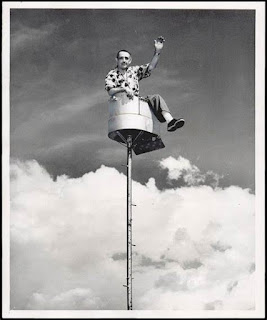
It didn't take long for our efforts to bear fruit and the poor soul began relating his adventurous, but misguided tale. He had been hired by a newly established whiskey distillery on Lincoln Avenue to set a flag pole sitting record as a publicity stunt. This activity, popular in the 1920s and resurrected in the 1960s was exactly as described. Our patient had been confined to a whiskey barrel platform erected on the very tip of a 60 foot flag pole. He was planning to break a 30 day record but was retired after several weeks when his ground crew could not communicate with him and called the Chicago police who delivered him to our ER. 

What goes up, must come down

Before internet advertising, business had to invent a number of  whacky schemes to promote their ventures. Oscar Mayer company had a vehicle resembling a hot dog on 4 wheels aptly called the wienermobile and it was piloted by none other than Little Oscar. Car dealerships used high voltage floodlights to illuminate the night sky and bring in customers. Like the emaciated flag pole sitter some of these promotions ended in a trip to the hospital. Lincoln Mercury had a genuine Cougar on hand at Chicago's Ampitheater auto show and all was hunky dory until the beast attacked his trainer.

It's a good reason that hospitals were not allowed to advertise or I suspect misguided CEOs would have considered a nurse for flag pole sitting duty. They expected us to perform just about any unsavory or unpleasant task imaginable.


'  

Sunday, January 30, 2022

Thursday, January 27, 2022

Life Before Piped in Oxygen - Tanks A Lot

Physiology pivots on the oxygen pinnacle

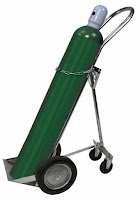
I thought those gigantic "H" cylinders of oxygen, not to be confused with their lesser sized brotherern, would be with us forever in the hospital. Oxygen delivered to wall outlets in patient's rooms seemed like a pipe dream because we had enough problems with our common old ordinary plumbing. There were steam leaks from autoclave pipes that resembled Old Faithful and recurrent problems with clogged drains. Pipes and problems went together like tweedle dee and tweedle dumb. How in the world could this ever work with a gas under high pressure?

I couldn't imagine oxygen pipes being exempt from similar pipe problems and, of course, I was an ace with the skills necessary to course these massive green cylinders around and about hospital wards and halls. Who needs fancy piped in O2?  A weak mind and a strong back were the only prerequisites for being an oxygen delivery boy, and of course the eager nurses and cyanotic patients were always overjoyed to see me with my life sustaining cargo. Just what a fragile adolescent male cast adrift in a sea of estrogen needed for an ego boost. I was really doing something worthwhile! This is why I chose nursing as a career instead of an auto mechanic.

Oxygen tank storage rooms were special places and out of bounds for most of the fairer sex. Green monsters chained to 2X12 wooden planks and weighing in at over 150 pounds required some muscle and lots of practice to safely handle. I used a trusty dolly to transport these bemouths and once they were set in motion inertia took over. Stopping these rolling monsters was akin to putting the brakes on a battleship.

The other tricky part was maintaining the correct incline while tipping the dolly into position. There were dollys with training wheels for the more cautious, but the tiny caster like wheels used on the trainer support system were prone to gyrating like a belly dancer and slowing the entire delivery process. It was no fun pushing these bruisers down a hospital corridor with those tiny wheels doing the watutsi.

Training wheels also impaired the ability to maneuver the tank into position at the patient's bedside. It was possible to fine tune the position of the tanks when it was released from the dolly by carefully rolling the base of the tank which was all fun and games until you rolled an "H" cylinder over your toes. I preferred the dolly sans training wheels.

Alas, all good things must come to an end, and the conversion of cavernous hospital wards to semi-private rooms was a game changer. Wrestling a colossal "H" oxygen cylinder into the cramped confines of puny 2 bed hospital room was akin to stuffing an elephant into a phone booth, these green monsters longed for the circus big top of a spacious ward where there was ample room to roam.

The construction required to section off individual rooms from the big tent arena of a hospital ward provided an opportunity to run pipelines for the bedside delivery of oxygen, and an end to wrestling with the big green monsters.

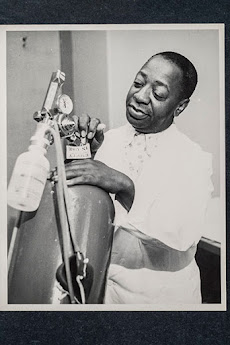
Endings like this are usually bittersweet. Yes, piped in oxygen was very convenient, but the bedside delivery of something as life sustaining as oxygen afforded the delivery boy an entire cosmos of goodwill. It was heartwarming to witness the relief and gratitude of patients and nurses alike, while I quickly switched out regulator yokes and twisted my oxygen wrench to the on position and noted the swing of the needle on the pressure gauge from near empty to full, good for another few days of life sustaining oxygen. I was transformed from lowly delivery boy to a genuine care giver and that was good enough for me.