Thursday, August 20, 2015

Scultetus Binders and Intermittent Gomco - Mainstays of the Abdominal Surgery Armamentarian

Old time abdominal surgery was a big deal with a lot of little nursing interventions that are unheard of today. The first order of business was to prepare a "surgical bed." I remember our instructors lecturing us that "The first thing to do is to determine which side of the bed the cart will be on when the patient is transferred back to his bed." The top sheet was then carefully fan-folded to the opposite side of patient entry and the top layer of sheet formed into a triangle that could be grasped and quickly pulled over the patient. Sometimes the orderly would attempt to transfer from the "wrong" side of the bed and panic ran wild among the students. Don't bother with the patient's airway, if you folded that sheet and it was on the wrong side of the bed you were in a heap of trouble.

The bed had to have a heavy muslin draw cloth with a scultetus ( skalte' tus) binder carefully centered in the middle. We used to remember the bizarre name of these things by thinking of a skull and a cup of tea that "us" applied." These binders were made in Central Supply by aging  nurses from old draw sheets. The draw sheet was divided in half and two lines of parallel  stitching about 18 inches apart were run down the center. Six to eight cuts were made from the outside to the inside of the drawsheet to the bilateral stitching at a right angle  to create "tails."

The post op patient was transferred from the OR cart to a position in bed lying prone with his abdomen centered on the binder. This thing was going to be applied very snugly around the patient so the gown had to out of the way. The binder was applied directly on top of the abdominal dressing which was secured with another hospital made product, "Mongomery Straps." It was prudent to do the initial binder application while the patient was still at least partially anesthetized to avoid pain associated movement.

The tails of the binder were wrapped around the patient very tightly as if in a Giant Python's grip and the top and bottom tails secured with safety pins. The middle tails were interwoven and friction held them in place. If the binder was only going to be on for a short period of time as in a minor procedure, towel clips could be used to secure the ends. Towel clips were much more secure but less comfortable for the patient.
This photo shows application of a binder. We were taught to apply it next to the dressing, never over a hospital gown. You just earned a bunch of demerits for this stunt!

We learned how to apply binders by practicing on each other. Miss Bruiser, one tough cookie of a nursing instructor demonstrated how to apply these things by using me as a victim patient.  When she was done, I felt like all the stuffing was being squeezed out of me. It was definitely unpleasant. This was the same instructor that told us to slap the injection site before giving an IM injection to "reduce discomfort." This old nugget of advice never worked. Perplexed patients used to ask "Why did you spank me?" and in peds the kids would only cry and scream louder. Miss Bruiser did not tolerate fools and was very insistent so we followed her instruction whether it worked or not.

The rationale for a binder was for patient comfort and to decrease the chance of evisceration. Patients really liked binders and they did seem to help with those ghastly huge incisions. Around 1970 or so commercially made binders were available at our hospital and they were much easier to use. They had very nice functional metal buckles to secure the tails of the binder.

Next to the binder, a common procedure after abdominal surgery was low intermittent Gomco suction. Hospital wards and rooms did not have piped in suction so we had wheeled portable devices called Gomcos, named after the company that manufactured them. The drainage from a NG tube was collected in a big glass bottle that had to be emptied every shift. I dropped a couple of glass IV bottles, but luckily never a huge Gomco bottle. I guess sometimes God looks out for fools.

After all the manipulation and retraction done during abdominal surgery, it often took a couple of days for peristalsis to return. The NG tube to low Gomco was kept in place until bowel sounds could be heard again. Patients were always delighted to get rid of their NG tubes.

I used to love the  rhythmic clicking and purring noise those  old Gomco machines made. When the low suction would initiate they would make a subtle "click" and then as the suction started they made a low pitched purr with a nice gradual crescendo. The cycle would then repeat. Sometimes the NG would occlude and this cycle would be interrupted for irrigation.

I realize binders and Gomcos are now a part of history, but in their time were very useful and provided a lot of bang for the buck. Binders were recycled form draw sheets and those old Gomco machines never broke down.

If I had any sense, this post would end here, but I have to relate this story of foolishness that has nothing to do with binders or Gomco suction. I once worked with an aging neurosurgeon, Dr. OCD that had a way of getting whatever he pleased from the tight wads in hospital administration. After receiving a new piece of equipment or obscure instrument he would strut around the OR bellowing that "We now have a left-handed Raney Clip Applier in our neurosurgical armamentarian." I guess armamentatian is a reference to medical resources available, but OR nurses had a hard time from giggling when he spouted off like this about some instrument or equipment that would never be used.

One day when Nancy and I were damp dusting the overhead lights in the OR, I started blabbering that we had new rags in our "armamentarian" to dust for the next case. I did not notice that Dr. OCD was standing in the doorway. He gave me one of the nastiest, mean looks he could muster under that surgical mask. I quickly shut up and tried to be extra pleasant to him. Luckily, I was one of his favorite scrub nurses so I did not get fired. Whenever I hear that armamentarian word it brings a big smile to my wrinkled up old face!



Sunday, August 16, 2015

Nursing Diploma School Song

I have been attempting to recall the words to the following song we used to sing just about everywhere in school when  our instructors were out of earshot. I found an old yellow 3X5 card with just a couple of verses that I saved from school.

We came here to get a cap, Honey. Honey.
We came here to get a cap, Babe. Babe.
We came here to get a cap. But all we do is clean up crap.
Honey. Little baby mine.

We came here to get a pin, Honey. Honey.
We came here to get a pin. Babe. Babe.
We came here to get a pin, but all we do is live in sin.
Honey. Little baby mine.

When we took boards it seemed like everyone, regardless of their school, knew the song. If anyone remembers the other verses or would like to make some up, I would love to hear about it. For some reason the song got stuck in my aging brain and won't go away and it's driving me nuts that I can't remember the rest of it. There were at least as many verses as Santa had reindeer.

Friday, August 14, 2015

IPPB for All

I hear the term "never event" tossed around in contemporary healthcare discussions and this brought to mind certain "always" events that occurred in old time hospitals. One treatment that every pre-op and post-op patient received in the early 1970s was intermittent positive pressure breathing or IPPB.
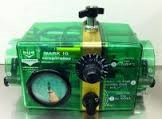
When the patient made an inspiratory effort a green colored machine called a Bird ram-rodded more air into their lungs. There were literally flocks of these Birds everywhere, jamming the elevators and flying down the halls. A savvy inhalation therapist could tether a bunch of them together and pull them along like a train.


This is a bird. These things were originally designed to be pressure limited ventilators and were used as such for a long time. I remember old Marcus Welby and Emergency TV shows that featured their use. When used as a ventilator they would cycle off after reaching a certain pressure. When the Puritan Bennet MA-1 was introduced in about 1970, these Birds gradually became extinct as ventilators. With the MA-1, volume limited ventilation ruled the roost because they always delivered the same tidal volume with each cycle.

I am just guessing, but this might be a reason IPPB became so popular. These Birds were just sitting around inhalation therapy departments looking for a place to roost. Some of the empirical reasons for IPPB was the notion that it could clear the anesthesia out of the lungs post op and prevent atelectasis. Just about every MD had  a different rationale for using IPPB. I remember one surgeon always wrote a post op order for inhalation therapy to DYT (do your thing)

Post op patients hated IPPB. Just imagine having a big abdominal incision and having a machine not under your control stretch the daylights out of it. Not a pleasant experience. I remember patients letting air leak out around the mouthpiece during inspiration to ease the painful chest excursion and the inhalation therapist threatening to restrain their hands and use a mask on them.  This was a time when healthcare workers told patients what was best for them whether they liked it or not.

When hospitals had to pay inhalation therapists more than $3.50 per hour (the 1970 wage), the cost of IPPB began to climb and insurance carriers began to question the value of IPPB. When actual study and science was applied to IPPB it lost support. Studies showed it had no benefit and actually had negative consequences such as decreasing cardiac output and triggering arrhythmias.

I wonder what became of all those Bird machines. I imagine they would make great aerators  for a fish farm in some third world country. More likely, they are just sitting around somewhere. It always amazes me how fast  something that was so common and popular could simply disappear. I wonder what modalities of treatment in use today will wind up in the trash heap tomorrow.

Monday, August 10, 2015

Student Nurses Commandments C. 1960

These "directives" were from the Halifax Infirmary School of Nursing sometime in the 1960's.

1. Thou shalt never appear untidy.

2. Neither shall thy hair touch thy collar scorning the ordained hairnet.

3.Thou shalt not - when on duty - friendly calls by phone receive.

4.Thou shall sleep in the darkness of thy room in my own bed  by 10:00 PM. What the heck was that about? Nor shalt thou study by flashlight or converse in low whispers lest by this thou shall disturb the sleep of thy royal roommate.

5. Thou shall not appear on duty artificially adorned nor shalt though gird thy fingers and arms with miscellaneous jewelry, nor display in thy pocket a colored handkerchief.

6. Thou shalt with interns maintain a strictly professional mien.

7. Neither shalt thou harbor the filthy weed. and thou shalt not in the residence partake of the company of Lady Nicotine.

8. Thou shalt not in the morning thy room leave untidy. Nor shall thy cupboard be compared to a bazaar.

9. Thy bed thou shalt strip on the third day of the week. Thou shalt leave it unmade 'till sundown, then thou shalt carefully replace the linen squaring the corners as is thy duty to thy knowledge.

10. Nor shalt though be tardy for breakfast.

Sunday, August 2, 2015

Scrub Sinks

I've been meaning to write a post comparing modern scrub sinks to those of yesteryear, but I haven't been able to get Cherry Ames off my mind since that last post. It's an addiction of sorts that rears it's ugly head from time to time.

A 12 step approach is probably in order here. I've been practicing that opening line, "My name is Oldfoolrn and I'm a Cherry Amesohloic." Oh well, I could give her up anytime, maybe next week. I'll get some help. She is interfering with my blogging, but I'll just have to try harder to put those Cherry Ames books down.

How is this one for a classic? "Cherry Ames, Rest Home Nurse."  Cherry  even avoids the pejorative connotations of using that nursing home terminology in the title. I bet there is nary a mention of decubitus ulcers or manually removing a fecal impaction. Just look how delighted that cheerful oldster beams as Cherry greets him. I like how that head gear tells a story. Cherry in her nursing cap and the oldster tipping his stylish hat to Cherry. There was nothing like a cap to establish a nurse's identity.


Well that's enough of Cherry. Recently a whippersnapperrn invited me to view a new operating room suite at the local hospital healthcare system. Wow! the first thing I noticed were the scrub sinks. They looked like something out of my grandchild's toy kitchen. Stainless steel might look nice in a gourmet  kitchen. But from my perspective completely unsuited for a surgical environment.

The noise made by the cascading water striking the stainless steel sink sounded vaguely familiar. Then suddenly like an epiphany, it came to me. The sound was an exact replication of a drunk voiding on a garbage can lid. This used to happen constantly in the alley behind my Chicago apartment.

The willy-nilly placement of these modern scrub sinks is another issue. Just hang them on a wall near the OR. Back in the day of huge porcelain sinks, placement was an important consideration. I have seen old time scrub sinks positioned with a beautiful view of the Chicago skyline or with a view into the OR. It was nice to be able to fix your gaze on pleasant distant scenery before all that close up work ahead in the OR. It was also fun gazing into that tiled temple of an operating room imagining how you were going to set up your Mayo stand.

That puny little foot activated faucet head is pathetic. It puts out as much water as  an octogenarian with an enlarged prostate. It's probably energy star approved, but we never worried about that. Our sinks had a length of perforated pipe running above and parallel to the sink. Water could be toggled from a trickle to Niagara Falls level with a knee operated valve. Nothing makes a lowly scrub nurse feel more powerful than knowing you have the capability of replicating a natural wonder like Niagra Falls by just a wiggle of your knee.

These new fangled  little sinks don't have the depth of yesteryears sinks. We never had to worry about contaminating ourselves on the back of the sink because it was a mile away. Likewise, the bottom of the sink was also a mile away. You never had to worry about contacting it with your arms.

Now this is a scrub sink. Proudly emblazoned with a name like AMERICAN STANDARD or SPEAKMAN. I can close my eyes and still see that proud name printed in blue on that brilliant white porcelain sink. When you were called in on a late night trauma, it was a real pleasure standing before this sink scrubbing. The brilliant white finish waking you up and preparing you to face those bright overhead lights in the OR.

We were required to scrub a full 10 minutes before each case usually with Phisohex which was later found to be a neurotoxin. I guess I could blame some of my dementia fueled foolishness on the scrub soap. We were also required to scrape out that subungal area under our nails before the first case. Your nails were required to be trimmed 1mm. and we actually had a supervisor that measured fingernails. Who knew that area under your nails had a fancy name like subungal? We never learned that one in anatomy class!

These scrub sinks were so big that they had another use. When a surgeon removed a questionable specimen, pathology would come up to the OR and dissect it in the sink. That white porcelain offering a beautiful neutral background for the specimen. I recall one instance when a pre op patient was parked in the hall and started to witness one of these intraoperative dissections. "Yecch! what's that?"  she shrieked. I sheepishly informed her it was a portion of a stomach and quickly relocated her down the hall. I felt really bad for her and stayed at her side until her room was ready for her. I guess she was more curious about what was going on than any thing else.

Comparing old and new scrub sinks is like comparing a modern Mini Cooper to an old Cadillac Eldorado. Sure. The Mini Cooper is far advanced and sophisticated, but it still feels like something is missing. Well I have to get back to reading Cherry Ames: Department Store Nurse oops I mean watching TV.

Friday, July 17, 2015

The Untold Story of Cherry Ames' Nightmares


 Cherry Ames, the idyllic character of old time nursing novels led a charmed life. Her adventures always involved handsome doctors and wealthy patients that she so artfully cared for. As every experienced nurse comes to know, not all doctors are Prince Charming and some experiences in nursing really are the stuff of nightmares. It is reasonable to conclude that Cherry probably had some bad dreams and here is some fodder that may have contributed to her restless night's sleep.


Weighted speculums used in gyne surgeries could send shivers down anyone's spine. Using such brute force on such  sensitive and delicate anatomy is like using a brick to break into your house when you can't find your keys. Don't drop one of these substantial instruments on your foot or you will have a fractured metatarsal to go along with that nightmare. To complete the unsavory image just imagine the waterfall like cascade of blood and drainage down the center of this thing during a procedure. (That's the purpose of the  vertical  channel running from the blade through ball shaped weight.) Cherry better not forget to carefully position a kick bucket under this thing or she will have a real mess on her hands when the case is finished.  I am certain this instrument was invented by a man.


Males don't escape the reproductive organ nightmares. The meatotomy done prior to a TUR always gave me goosebumps. That cold steel slicing right through the tip of a penis is real nightmare material. If the anesthesia is light, the circulating nurse better be available if the patient moves around.

Chest tube insertions on a conscious patient always brought to mind some sort of  Samurai Swordsman ritual. That huge trocar with that golf ball sized handle to thrust the thing into someone's chest probably gave Cherry the creeps too. I don't recall if there was a Cherry Ames, Thoracic Nurse novel. I bet she conveniently deleted the chest tube insertion procedure from her book, but things like this can come back to haunt you in the middle of the night. Yikes!

Cleaning up an OR late at night (more likely very early in the morning) after a failed trauma surgery. No housekeeping (environmental services for you whippersnapperrn's)  on duty so Cherry and her fellow scrub nurse must shoulder the unpleasant details.  Cherry cheerfully draws straws with her nurse colleague using discarded suture material to determine who gets to clean the equipment and who gets to do post mortem care on the body. Don't forget to mop up that bloody, bone chip slurry from the floor. Now it's off to dreamland. Try and not scream to loud when that nightmare wakes you up.

Finally, Cherry probably had some unpleasant dreams about administering Lactulose enemas to patients in hepatic failure. It was no problem positioning the patient on their side, that ascetic abdomen acted as ballast pulling them over. The sweet sickening smell of that Lactulose combined with foul stool is not something to be forgotten. A type of hospital version of sweet and sour sauce. Bonus nightmare potential if there is an accompanying GI bleed.  I wonder if Cherry experienced olfactory sensations in her bad dreams?

During the first week of nursing school an informal poll revealed that all 76 of us had read Cherry Ames books at one time or another. A real marketing accomplishment for the publisher. We soon realized that real nursing was pretty much the opposite of Cherry's experiences. In pediatrics we always chided one another "I bet Cherry never made a little kid like that cry and scream after an injection." The remarks persisted into other rotations.

I always suspected there was a hidden side to Cherry. After all, in Jungle Nurse she got involved with an international smuggling ring. Her constant travelling and job hopping made it appear as though she was running from something. Why was there no RN after her name? Had a state board revoked her license? Did she even pass boards? Lots of unanswered questions, but I suspect she really did have some nasty nightmares.

Sunday, July 12, 2015

Down a Quart? Hypodermoclysis to the Rescue

Poor skin turgor? Coated tongue? Urinary output down? No need for blood and/or urine osmols and you can forget about getting ADH levels, diagnosis of dehydration was based on well known physical signs.  You know it when you see it.

Usually there was some issue compromising oral fluid intake. A quick, easy way to get a liter of fluid on board was hypodermoclysis which was seen as a bridge to adequate oral fluid intake. Very few patients had an IV line in place.  The equipment included a 1000cc bottle of 0.9% saline and tubing which diverged into 2 tubes via a Y shaped bifurcation about 18 inches below the bottle. The two tubes were about 36 inches long and were connected to a 2 inch 20ga. needle.

The liter of fluid was hung from an IV pole or even attached to the traction frame of an ortho bed. The 2 inch needles were inserted very shallow and parallel to the skin of the anterior thigh with one needle per thigh. As a young whippersnapperrn, I asked an experienced nurse, "Why do we have to use such long needles for this?" The answer was "The fluid leaks out with short needles." Being the free spirit that I am, I once tried 1 1/2 inch  needles and it worked just fine. Somehow, those 2 inch needles looked inhumane to me. Similar to those EKG needle electrodes that used to creep me out when sticking a patient with them.

After the needles were in place, the fluid was allowed to flow in without any clamps or regulation. This usually took about 3-4 hours. Old hospital rooms really did not have room for equipment like IV pumps or controllers which is a moot point as they were not yet invented.

One criticism I've heard of clysis is that it dumps liquid into an inappropriate fluid compartment (interstitial)  and this renders it ineffective. When patients were badly dehydrated, they seemed to absorb subcutaneous fluids well.  It did seem to work on a short term basis. Often a clysis would perk a patient up enough to begin taking oral fluids. Another advantage was since the needle insertion site was further from the patients hands, it was less likely to be pulled out.  Since a hypodermoclysis site did not need observed closely like an IV site it could be covered with a dressing to prevent patient tampering.

Clysis was a rather crude way of replacing fluids that certainly had limitations, but, amazingly usually worked fairly well.